

When the cash is paid, an adjusting entry is made to remove the account payable that was recorded together with the accrued expense previously. Unearned Revenues is a liability account that reports the amounts received by a company but have not yet been earned by the company. Interest Payable is a liability account that reports the amount of interest the company owes as of the balance sheet date. Accountants realize that if a company has a balance in Notes Payable, the company should be reporting some amount in Interest Expense and in Interest Payable.
What is an Adjusting Journal Entry?
Therefore, at December 31 the amount of services due to the customer is $500. It is unusual that the amount shown for each of these accounts is the same. Interest Expense will be closed automatically at the end of each accounting year and will start the next accounting year with a $0 balance. The purpose of Adjusting Entries is show when money has actually changed hands and convert real-time entries to reflect the accrual accounting system. In February, you record the money you’ll need to pay the contractor as an accrued expense, debiting your labor expenses account. If you do your own accounting, and you use the accrual system of accounting, you’ll need to make your own adjusting entries.
- Adjusting entries are most commonly used in accordance with the matching principle to match revenue and expenses in the period in which they occur.
- But you’re still 100% on the line for making sure those adjusting entries are accurate and completed on time.
- There’s an accounting principle you have to comply with known as the matching principle.
- We now record the adjusting entries from January 31, 2019, for Printing Plus.
- No matter what type of accounting you use, if you have a bookkeeper, they’ll handle any and all adjusting entries for you.
- One might find it necessary to “back in” to the calculation of supplies used.
adjusting entry for unearned revenue

We at Deskera offer an intuitive, easy-to-use accounting software you can access from any device with an internet connection. Recall the transactions for Printing Plus discussed inAnalyzing and Recording Transactions. Recall the transactions for Printing Plus discussed in Analyzing and Recording Transactions. In March, you completed a project for a client and billed them for $4,000. You have established payment terms of Net 60 Days with that client, meaning they won’t pay you until May.
- Accountants must disclose significant estimates in the notes to the financial statements, explaining the methodology and assumptions used.
- (The depreciation journal entry includes a debit to Depreciation Expense and a credit to Accumulated Depreciation, a contra asset account).
- Each step in the accounting cycle builds upon the previous one, creating a structured framework that promotes accuracy, consistency, and compliance.
- This refers to cash received before services are rendered or goods are delivered.
- This is posted to the Supplies Expense T-account on the debit side (left side).
- Unearned revenue is income received for services not yet performed, while deferred revenue is income received for products not yet delivered.
- They help ensure that revenues and expenses are recorded in the correct accounting period, maintaining the accuracy of financial statements.
⃣ UNEARNED REVENUE
- We’ll then dive further into adjusting journal entries, exploring different types, providing examples, and discussing how and when to make journal entry adjustments.
- The balance in Accounts Receivable also increases if the sale was on credit (as opposed to a cash sale).
- With an adjusting entry, the amount of change occurring during the period is recorded.
- At this stage, adjusting journal entries are made to account for revenues earned and expenses incurred that have not yet been recorded, ensuring the accuracy of the financial records.
- Since the account has a $900 balance from the December 8 entry, one “backs in” to the $700 adjustment on December 31.
- We can break down steps five and six of the accounting cycle into a bit more detail.
Since the expense was incurred in December, it must be recorded in December regardless of whether it was paid or not. In this sense, the expense is accrued or shown as a liability in December until it is paid. Unearned revenues are also recorded because these consist of income received from customers, but no goods or services have been provided to them. In this sense, the company owes the customers a good or service and must record the liability in the current period until the goods or services are provided. The $25,000 balance in Equipment is accurate, so no entry is needed how is sales tax calculated in this account.
Notes Payable is a liability account that reports the amount of principal owed as of the balance sheet date. With the Deskera platform, your entire double-entry bookkeeping (including adjusting entries) can be automated in just a few clicks. Every time a sales invoice is issued, the appropriate journal entry is automatically created by the system to the corresponding receivable or sales account. Manually creating adjusting entries every https://iglered.org/house-republican-calls-for-hearing-on-ice-involved/ accounting period can get tedious and time-consuming very fast. At the same time, managing accounting data by hand on spreadsheets is an old way of doing business, and prone to a ton of accounting errors.
Significance of Accruals
- Unless the interest is paid up to date, the company will always owe some interest to the lender.
- The point is to make your accounting ledger as accurate as possible without doing any illegal tampering with the numbers.
- To deal with the mismatches between cash and transactions, deferred or accrued accounts are created to record the cash payments or actual transactions.
- This means revenues and expenses are recorded when they are earned or incurred, regardless of when cash transactions occur.
- A company selling merchandise on credit will record these sales in a Sales account and in an Accounts Receivable account.
In October, cash is recorded into accounts receivable as cash expected to be received. Then when the client sends payment in December, it’s time to make the adjusting entry. Accumulated depreciation refers to the accumulated depreciation of a company’s asset over the life of the company. On a company’s balance sheet, accumulated depreciation is called a contra-asset account and it is used to track depreciation expenses. Prepaid expenses refer to assets that are paid for and that are gradually used up during the accounting period.
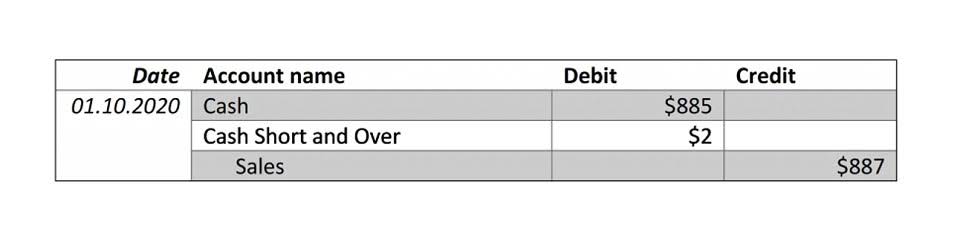
If you don’t make adjusting entries, your books will show you paying for expenses before they’re actually incurred, or collecting unearned revenue before you can actually use the money. Accounting for unearned revenue can also follow a balance sheet or income statement approach. The balance sheet approach for unearned revenue is presented at left below. At right is the income statement approach, wherein the initial receipt is recorded entirely to a Revenue account.

This involves examining supporting documents, understanding contract terms, and applying accounting judgment. Adjusting entries can also influence the statement of cash flows indirectly, as they affect net income and working capital, both of which play a role in calculating operating cash flow. Fourth, they should implement a segregation of duties to separate the responsibilities of preparing, reviewing, and approving adjusting entries. Third, they should verify the accuracy and precision of adjusting entries before finalizing them. Second, they should maintain thorough documentation for all adjusting entries, including the reason for the adjustment and supporting calculations.

Accrued revenues
For example, determine how much of a prepaid service has been consumed. Depreciation allocates the cost of a tangible fixed asset over its useful life. Though no cash transaction occurs, the wear and tear of the asset must adjusting entries be reflected as an expense. In practice, accountants must analyze each account, identify any discrepancies, and make the necessary adjustments before the financial statements are finalized.